

- Spoken Word
- Wintery
Wronke, den 23. 5. 1917
“Gestern höre ich plötzlich von drüben über die Mauer, die unseren Hof von einem anderen Gefängnisterrain trennt, den bekannten Gruß, aber so ganz verändert, nur ganz kurz und eilig dreimal hintereinander »Zizi bä – Zizi bä – Zizi bä«, dann wurde es still. Mir zuckte das Herz zusammen, so viel lag in diesem eiligen, fernen Ruf, eine ganze kleine Vogelgeschichte. Das war nämlich eine Erinnerung der Blaumeise an die schöne Zeit des Liebeswerbens im Vorfrühling, wo man den ganzen Tag sang und lockte; jetzt aber heißt es den ganzen Tag fliegen und Mücken sammeln für sich und die Familie, also nur kurz eine Reminiszenz: »Ich habe keine Zeit – ach ja, es war schön – Frühling ist bald zu Ende – Zizi bä – Zizi bä – Zizi bä –! – – –« Glauben Sie mir, Sonjuscha, daß mich ein solcher kleiner Vogelruf, in dem so viel Ausdruck liegt, tief ergreifen kann. Meine Mutter, die nebst Schiller die Bibel für der höchsten Weisheit Quell hielt, glaubte steif und fest, daß König Salomo die Sprache der Vögel verstand. Ich lächelte damals mit der ganzen Überlegenheit meiner 14 Jahre und einer modernen naturwissenschaftlichen Bildung über diese mütterliche Naivität. Jetzt bin ich selbst wie König Salomo: ich verstehe auch die Sprache der Vögel und der Tiere. Natürlich nicht, als ob sie menschliche Worte gebrauchten, sondern ich verstehe die verschiedensten Nuancen und Empfindungen, die sie in ihre Laute legen. […] Wenn man die Tiere liebt und für sie Verständnis hat, findet man große Mannigfaltigkeit des Ausdrucks, eine ganze Sprache. Auch das allgemeine Verstummen jetzt nach dem Lärm des Vorfrühlings, und ich weiß, wenn ich noch im Herbst hier bin, was aller Wahrscheinlichkeit nach der Fall sein wird, dann werden alle meine Freunde wieder zurückkehren und an meinem Fenster Futter suchen; ich freue mich schon jetzt auf die eine Kohlmeise, mit der ich besonders befreundet bin.”
Rosa Luxemburg
Wronke, May 23, 1917
“Yesterday, I suddenly heard the familiar greeting from across the wall separating our yard from another prison yard, but it was completely different, just a short and hurried ”Zizi bä – Zizi bä – Zizi bä" three times in a row, then it went quiet. My heart skipped a beat, so much was contained in that hurried, distant call, a whole little bird story. It was a blue tit's memory of the beautiful time of courtship in early spring, when they sang and called all day long; but now it's all about flying around all day and collecting mosquitoes for themselves and their families, so just a brief reminiscence: “I don't have time – oh yes, it was beautiful – spring is almost over – Zizi bä – Zizi bä – Zizi bä –! – – –” Believe me, Sonjuscha, that such a small bird call, in which so much expression lies, can move me deeply. My mother, who considered the Bible and Schiller to be the highest sources of wisdom, firmly believed that King Solomon understood the language of birds. At the time, I smiled at my mother's naivety with all the superiority of my 14 years and a modern scientific education. Now I am like King Solomon myself: I also understand the language of birds and animals. Not, of course, as if they used human words, but I understand the various nuances and feelings they put into their sounds. […] If you love animals and understand them, you will find a great variety of expressions, a whole language. Even the general silence now after the noise of early spring, and I know that if I am still here in the fall, which is most likely the case, then all my friends will return and look for food at my window; I am already looking forward to the one great tit with whom I am particularly friendly."
Rosa Luxemburg
The fragment from the Rosa Luxemburg's letter has been read by Jennifer de Negri
BIBLIOGRAPHY
Bridle, J., 2022. Ways of Being.
Maxia, C., 2015. Il suono nel rapporto uomo-animale. Medea, 1(1).
Recalde, N.M., Estandía, A., Keen, S.C., Cole, E.F. and Sheldon, B.C., 2025. The demographic drivers of cultural evolution in bird song. Current Biology, 35(7), pp.1631-1640.
Williams, H., Levin, I.I., Norris, D.R., Newman, A.E. and Wheelwright, N.T., 2013. Three decades of cultural evolution in Savannah sparrow songs. Animal Behaviour, 85(1), pp.213-223.
Van der Wal, J.E., Dauda, C., Lloyd-Jones, D.J., Murico, H., Begg, C.M., Begg, K.S., Jorge, A.A. and Spottiswoode, C.N., 2025. The economic value of human-honeyguide mutualism in Reserva Especial do Niassa, Moçambique. Ecosystem Services, 72.
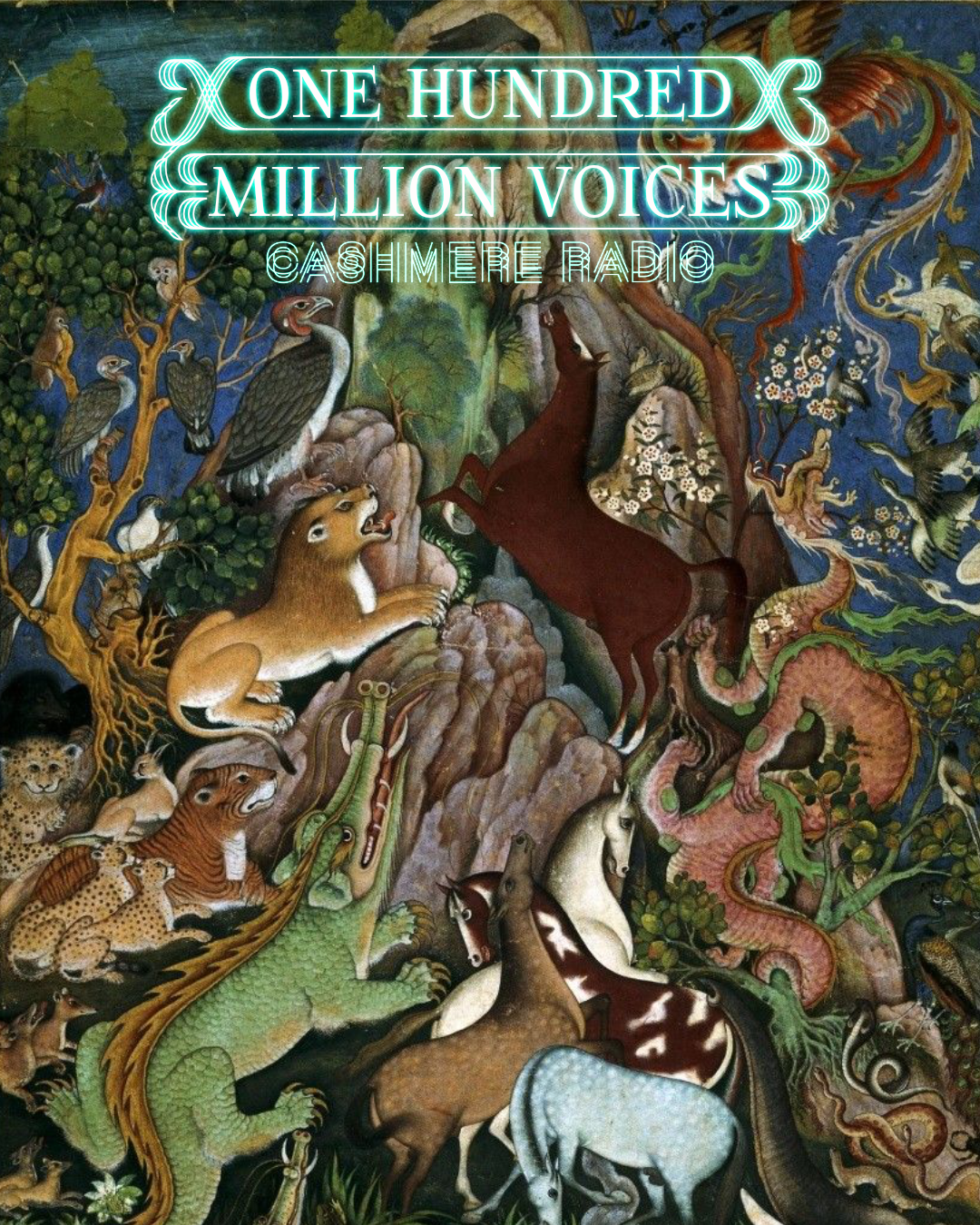
Playlist
aiel - Procyon Fugueryouko - Solstice (Quit Life Remix)
Charles Crawford Gorst - Laughing love (whistling solo with orchestra, original recording from 1915)
Human as Possible - First Attempt
Francesco Massaro - Paradisea (courtship dance)
tibslc x Ludwig Wandinger - little birds ~ or how I've folded myself into a tiny letter